
Lane Discipline Essentials 2026
Driving standards continue to evolve, but one principle remains fundamental to road safety: correct lane usage. In Lane Discipline Essentials 2026, SteeringSkills UK highlights why lane discipline is not just a rulebook concept, but a critical defensive driving skill that influences traffic flow, hazard avoidance, and accident prevention. Whether you are a learner driver, a newly licensed motorist, or an experienced commuter, understanding lane behaviour is central to becoming a safer, more confident road user.
Lane discipline is often underestimated because it seems simple — stay within your lane. In reality, it involves observation, anticipation, positioning, and decision-making. Poor lane habits contribute to congestion, near misses, and serious collisions, especially on high-speed roads.
Why Lane Discipline Essentials 2026 Matters More Than Ever
Modern roads are busier, vehicles are faster, and distractions are more common. Lane Discipline Essentials 2026 emphasises that maintaining proper lane position improves predictability, which is one of the most important elements of safe driving. When drivers behave consistently, other road users can anticipate movements, reducing sudden braking, swerving, and confusion.
Correct lane discipline supports smoother traffic movement, minimises unnecessary lane changes, and helps prevent side-impact crashes. On motorways and dual carriageways, where speeds are higher, even small positioning errors can have serious consequences.
Understanding the Core Principle of Lane Discipline Essentials 2026
At its core, lane discipline means selecting the appropriate lane and remaining in it unless a safe, necessary manoeuvre is required. SteeringSkills UK teaches that good lane behaviour relies on:
- Continuous mirror checks
- Awareness of blind spots
- Maintaining safe following distances
- Smooth, deliberate lane changes
Drivers who constantly drift, weave, or hesitate create uncertainty. Predictable driving reduces risk and promotes cooperative road behaviour.
Lane Discipline Essentials 2026 on Motorways and Dual Carriageways
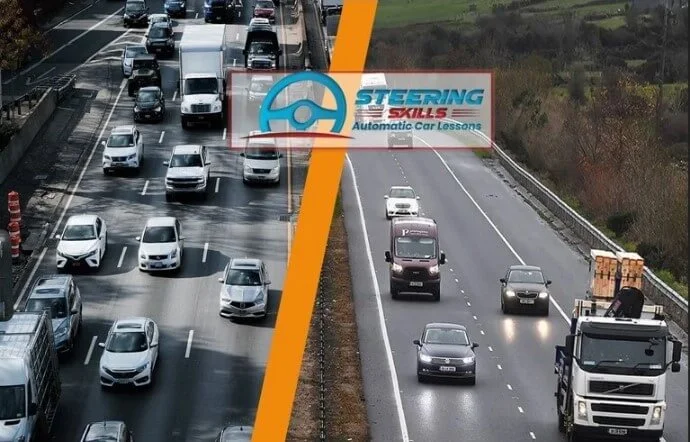
High-speed roads demand heightened precision. One of the most common mistakes is unnecessary middle-lane driving. Lane Discipline Essentials 2026 reminds drivers that the left lane is the default driving lane unless overtaking.
Remaining in the middle lane without reason restricts traffic flow and encourages unsafe undertaking. Proper motorway lane usage improves efficiency, reduces driver frustration, and lowers collision risks.
Effective motorway discipline includes:
- Returning to the left lane after overtaking
- Avoiding abrupt lane changes
- Matching speed to traffic conditions
- Reading road signs and markings early
Urban Driving and Lane Discipline Essentials 2026
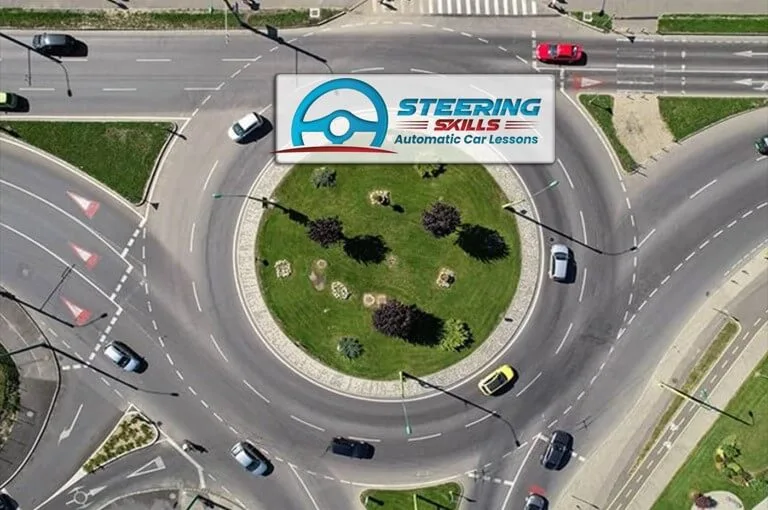
City environments present different challenges. Lane markings may be faded, traffic density is high, and interactions with cyclists, buses, and pedestrians are frequent. Lane Discipline Essentials 2026 highlights the importance of lane awareness at junctions, roundabouts, and multi-lane roads.
Urban lane discipline involves interpreting arrows, bus lanes, cycle lanes, and turning restrictions. Late decisions often lead to unsafe swerving or hesitation. Planning ahead is essential for safe navigation.
Observation Skills in Lane Discipline Essentials 2026
Observation is the foundation of correct lane behaviour. SteeringSkills UK stresses that mirror usage is not occasional — it is continuous. Drivers should scan mirrors before changing speed, direction, or position.
Key observation habits include:
- Checking mirrors before signalling
- Verifying blind spots before moving laterally
- Monitoring surrounding vehicle speeds
- Anticipating lane closures or merges
Poor observation leads to sudden corrections, which increase collision probability.
Safe Lane Changes: A Key Focus of Lane Discipline Essentials 2026
Changing lanes is one of the most risk-prone actions while driving. Lane Discipline Essentials 2026 promotes a structured approach:
- Mirror check
- Signal intention
- Blind spot verification
- Smooth, controlled movement
Rushed or aggressive lane changes disrupt traffic and may trigger defensive reactions from other drivers. Smooth transitions maintain stability and safety.
Common Mistakes Addressed in Lane Discipline Essentials 2026
Many lane errors stem from habit rather than intent. SteeringSkills UK frequently observes:
- Drifting between lanes
- Cutting corners on bends
- Late lane selection at junctions
- Overcorrecting steering
Lane Discipline Essentials 2026 encourages drivers to remain mentally engaged and avoid complacency. Even experienced drivers can develop unsafe lane habits over time.
Lane Discipline Essentials 2026 and Defensive Driving
Lane discipline is inseparable from defensive driving. Proper positioning provides better visibility, escape routes, and reaction time. Maintaining space and stability within a lane improves hazard response.
Defensive lane behaviour includes:
- Avoiding tailgating
- Anticipating erratic drivers
- Adjusting position for visibility
- Minimising unnecessary lane changes
These strategies reduce stress and increase control.
Technology and Lane Discipline Essentials 2026
Modern vehicles increasingly feature lane-assist systems, blind-spot monitoring, and adaptive cruise control. While helpful, Lane Discipline Essentials 2026 cautions that technology supplements — not replaces — driver responsibility.
Overreliance on automation can weaken observation skills. Drivers must remain attentive, interpret road conditions, and maintain manual control when necessary.
Sharing the Road: Lane Discipline Essentials 2026 for Mixed Traffic
Roads are shared spaces. Correct lane discipline improves safety for vulnerable users such as cyclists, motorcyclists, and pedestrians. SteeringSkills UK highlights that predictable positioning allows others to make safer decisions.
Respectful lane behaviour includes:
- Giving adequate space when overtaking cyclists
- Avoiding sudden lane encroachment
- Observing lane restrictions
- Anticipating merging traffic
Courtesy and awareness enhance overall safety.
Psychological Factors Behind Lane Discipline Essentials 2026
Driving behaviour is influenced by mindset. Fatigue, impatience, and distraction often lead to lane errors. Lane Discipline Essentials 2026 encourages drivers to manage stress, maintain focus, and avoid aggressive reactions.
Calm, consistent driving improves judgement and reduces impulsive manoeuvres. Good lane discipline reflects mental discipline as much as physical control.
Building Better Habits Through Lane Discipline Essentials 2026
Developing strong lane habits requires conscious effort. SteeringSkills UK recommends:
- Practising mirror routines
- Maintaining steady steering input
- Planning lane selection early
- Reviewing mistakes constructively
Like any driving skill, lane discipline improves with awareness and repetition.
Final Thoughts on Lane Discipline Essentials 2026
Lane discipline is not merely about staying between painted lines — it is about safety, efficiency, and responsibility. Lane Discipline Essentials 2026 underscores that correct lane usage reduces collisions, supports traffic flow, and enhances driver confidence.
At SteeringSkills UK, we believe disciplined drivers are safer drivers. By combining observation, anticipation, and smooth vehicle control, motorists can navigate modern roads with greater precision and reduced risk. Mastering lane discipline today means building safer driving habits for the future.
Frequent Ask Questions:
Here are 10 FAQs for “Lane Discipline Essentials 2026”
What does lane discipline mean in everyday driving?
Lane discipline refers to selecting the correct lane for your direction and staying within it unless a safe and necessary manoeuvre is required. It involves observation, signalling, and controlled vehicle positioning.
Why is lane discipline so important for road safety?
Proper lane usage improves predictability, reduces sudden manoeuvres, and minimises collision risks. It helps maintain smooth traffic flow and allows other drivers to anticipate your movements.
What are the most common lane discipline mistakes drivers make?
Frequent errors include unnecessary middle-lane driving, drifting between lanes, late lane changes, ignoring road markings, and failing to check blind spots before moving.
How should drivers perform a safe lane change?
A safe lane change involves checking mirrors, signalling clearly, verifying blind spots, and making a smooth, controlled movement without disrupting surrounding traffic.
Is middle-lane driving always considered incorrect?
On motorways and dual carriageways, the left lane is the default. Staying in the middle lane without overtaking can obstruct traffic and may be considered poor lane discipline.
How does lane discipline apply in urban areas?
Urban lane discipline requires attention to arrows, bus lanes, cycle lanes, and junction markings. Early planning is essential to avoid sudden or unsafe lane movements.
Can vehicle technology replace good lane discipline skills?
No. While lane-assist and blind-spot monitoring systems are helpful, drivers remain responsible for observation, decision-making, and maintaining correct lane positioning.
How does poor lane discipline increase accident risks?
Erratic positioning, late decisions, and abrupt lane changes create uncertainty, often leading to sudden braking, near misses, or side-impact collisions.
How can drivers improve their lane discipline habits?
Consistent mirror checks, better anticipation, steady steering control, and planning lane selection early significantly enhance lane discipline and overall safety.
Does lane discipline affect driving test performance?
Yes. Examiners closely assess lane usage, observation, and positioning. Poor lane discipline can result in faults or test failure, especially if safety is compromised.
Read more blogs:
Lane Discipline Essentials 2026 | What’s the Difference between Intensive vs Regular Driving Course?