
Junctions, Roundabouts and Crossing 2026
Road networks are becoming increasingly complex, and with rising traffic density, mastering key traffic interaction points is more important than ever. In Junctions, Roundabouts and Crossing 2026, SteeringSkills UK explores how drivers can safely navigate these high-risk areas using structured observation, correct positioning, and defensive driving strategies. Whether you are a learner driver or an experienced motorist, understanding how to approach and manage these situations is fundamental to road safety.
Collisions frequently occur not because drivers lack basic vehicle control, but because they misjudge priority, speed, or the behaviour of other road users. Junctions, roundabouts, and crossings demand heightened awareness and precise decision-making.
Why Junctions, Roundabouts and Crossing 2026 Matters for Modern Drivers
Traffic interaction points require drivers to process multiple moving elements simultaneously. Junctions, Roundabouts and Crossing 2026 highlights that these locations combine merging traffic, varying speeds, pedestrians, cyclists, and changing priorities — all within seconds.
Failure to observe correctly or anticipate hazards can lead to sudden braking, side-impact collisions, or dangerous hesitation. Modern driving conditions, including larger vehicles and increased distractions, make disciplined techniques essential.
Understanding Priority Rules in Junctions, Roundabouts and Crossing 2026
Priority is the backbone of safe navigation. At junctions, drivers must recognise who has the right of way, interpret road signs, and respond smoothly. SteeringSkills UK emphasises that hesitation can be just as dangerous as aggression.
Correct priority management involves:
- Reading road signs early
- Observing vehicle speeds
- Identifying potential hazards
- Making decisive yet safe movements
Misunderstanding priority is one of the most common causes of urban accidents.
Observation Techniques in Junctions, Roundabouts and Crossing 2026
Observation is more than simply looking ahead. Junctions, Roundabouts and Crossing 2026 stresses the importance of scanning, mirror usage, and hazard perception. Drivers must evaluate not only what is visible, but also what may emerge unexpectedly.
Effective observation includes:
- Checking mirrors before slowing or turning
- Looking both ways at junctions
- Monitoring pedestrian behaviour
- Anticipating concealed vehicles
Strong observation skills dramatically reduce reaction time errors.
Safe Approaches to Junctions in Junctions, Roundabouts and Crossing 2026
Junctions vary widely — T-junctions, crossroads, staggered junctions, and controlled intersections. Each demands careful speed adjustment and lane positioning. SteeringSkills UK advises drivers to approach junctions with controlled speed and readiness to stop.
Critical elements include:
- Gradual deceleration
- Proper lane alignment
- Early signalling
- Continuous scanning
Rushing into junctions or braking late significantly increases collision risks.
Roundabout Navigation in Junctions, Roundabouts and Crossing 2026
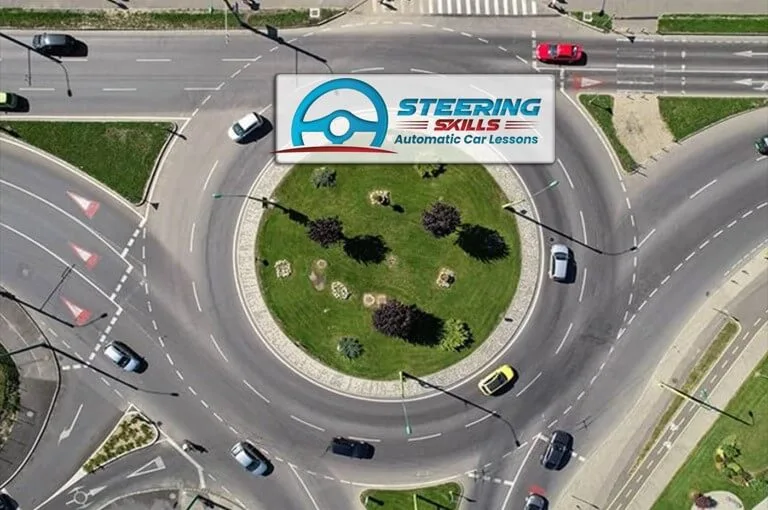
Roundabouts are designed to improve traffic flow, yet they remain challenging for many drivers. Junctions, Roundabouts and Crossing 2026 explains that confusion often arises from poor lane discipline, incorrect signalling, and misjudged gaps.
Safe roundabout behaviour involves:
- Selecting the correct lane early
- Yielding to traffic from the right
- Maintaining steady speed
- Signalling clearly when exiting
Predictable movements help maintain safety and traffic efficiency.
Multi-Lane Roundabouts and Junctions, Roundabouts and Crossing 2026
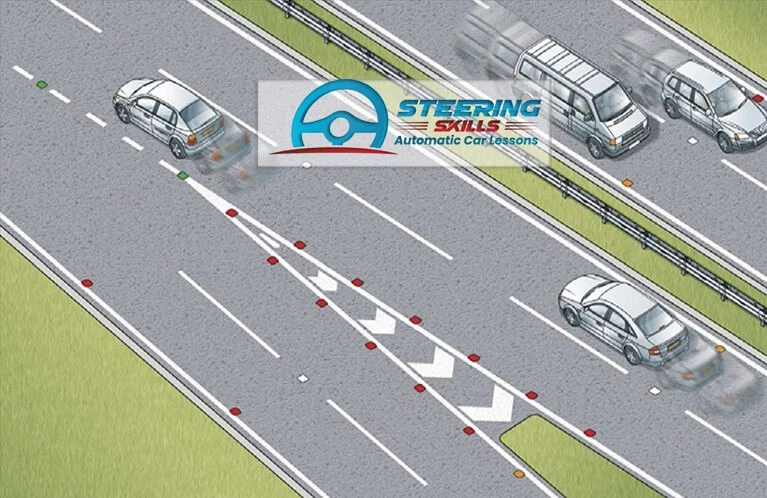
Multi-lane roundabouts introduce additional complexity. Drivers must interpret lane markings, anticipate exits, and monitor vehicles alongside them. SteeringSkills UK frequently observes errors caused by late lane changes or drifting between lanes.
Best practices include:
- Reading road markings early
- Avoiding sudden lane shifts
- Maintaining consistent steering
- Checking blind spots before moving
Precision and planning are essential for safe navigation.
Pedestrian Crossings in Junctions, Roundabouts and Crossing 2026
Crossings are critical safety zones. Junctions, Roundabouts and Crossing 2026 emphasises that drivers must anticipate pedestrian intentions, not merely react to movement. Pedestrians may hesitate, change direction, or step unexpectedly.
Safe crossing behaviour requires:
- Reduced approach speed
- Awareness of vulnerable users
- Readiness to stop
- Avoidance of distraction
Patience and anticipation are key defensive driving principles.
Cyclists and Vulnerable Road Users in Junctions, Roundabouts and Crossing 2026
Cyclists and motorcyclists present unique visibility challenges. SteeringSkills UK highlights that many incidents occur when drivers fail to detect smaller road users at junctions or roundabouts.
Drivers should:
- Double-check mirrors and blind spots
- Allow adequate space
- Avoid cutting across paths
- Anticipate sudden movements
Respectful driving behaviour improves safety for everyone.
Speed Management in Junctions, Roundabouts and Crossing 2026
Speed control directly affects decision-making and stopping distance. Junctions, Roundabouts and Crossing 2026 stresses that excessive speed is a major contributor to junction and roundabout collisions.
Drivers must adapt speed based on:
- Visibility
- Traffic density
- Road layout
- Pedestrian presence
Controlled speed allows smoother, safer responses.
Decision-Making and Risk Assessment in Junctions, Roundabouts and Crossing 2026
Every interaction point demands rapid judgement. SteeringSkills UK teaches that safe decisions balance caution with confidence. Indecision can confuse other drivers, while impulsive moves increase crash probability.
Strong decision-making relies on:
- Early hazard recognition
- Accurate speed evaluation
- Clear signalling
- Smooth vehicle control
Practised judgement reduces stress and improves safety.
Common Errors Identified in Junctions, Roundabouts and Crossing 2026
Many mistakes are behavioural rather than technical. Frequent issues include:
- Late signalling
- Incorrect lane selection
- Misjudging gaps
- Ignoring pedestrian priority
Junctions, Roundabouts and Crossing 2026 encourages drivers to remain mentally engaged and avoid complacency.
Building Confidence Through Junctions, Roundabouts and Crossing 2026
Confidence develops through structured practice and awareness. SteeringSkills UK recommends gradual exposure, consistent mirror routines, and reflection on mistakes without anxiety.
Drivers who understand traffic patterns and anticipate hazards tend to remain calmer and more controlled under pressure.
Final Thoughts on Junctions, Roundabouts and Crossing 2026
Navigating traffic interaction points is one of the most demanding aspects of driving. Junctions, Roundabouts and Crossing 2026 underscores that safety depends on observation, positioning, speed management, and disciplined decision-making.
At SteeringSkills UK, we believe safe driving is a learned behaviour, not a natural instinct. By applying defensive driving techniques and maintaining situational awareness, drivers can confidently handle junctions, roundabouts, and crossings while significantly reducing risk. Mastery of these skills leads not only to test success, but to safer roads for all users.
FAQs on “Junctions, Roundabouts and Crossing 2026“
Here are 10 FAQs for “Junctions, Roundabouts and Crossing 2026” from a SteeringSkills UK, United Kingdom perspective:
What is the biggest challenge drivers face at junctions in the United Kingdom?
In the UK, the most common difficulty is correctly judging priority and gaps while managing busy traffic conditions. Many learners struggle with observation timing, especially at uncontrolled or partially obscured junctions.
How should drivers approach a junction safely on UK roads?
Drivers should reduce speed early, check mirrors, observe both directions, and be prepared to stop if necessary. Proper positioning, smooth braking, and early decision-making are essential for safe junction handling.
Who has priority at roundabouts in the United Kingdom?
On UK roundabouts, traffic approaching from the right generally has priority unless road signs or markings indicate otherwise. Drivers must always confirm by observing vehicle movement rather than relying solely on assumption.
What mistakes commonly occur at UK roundabouts?
Frequent errors include incorrect lane selection, failing to give way, late signalling, hesitation, and misjudging other vehicles’ speeds. Poor observation is a leading cause of roundabout-related incidents.
How important is signalling at roundabouts in the UK?
Signalling is crucial. Drivers must indicate clearly when exiting and, where appropriate, when changing lanes. Correct signalling improves predictability and reduces confusion for other road users.
What should drivers be aware of at pedestrian crossings in the UK?
Drivers must watch for pedestrians waiting to cross, slowing early and stopping when required. UK law prioritises pedestrian safety at designated crossings, making anticipation and patience essential.
How should drivers handle multi-lane roundabouts in the United Kingdom?
Drivers should read road markings early, choose the correct lane before entering, maintain lane discipline, and avoid sudden movements. Consistent observation and steady steering control are critical.
Why do many driving test faults occur at junctions and roundabouts?
These areas require rapid decision-making, accurate observation, and correct positioning. Examiners often mark faults when learners hesitate, misjudge gaps, or fail to maintain safe control.
How can learners improve confidence at junctions and crossings?
Structured practice, effective mirror routines, and understanding traffic flow patterns help build confidence. Gradual exposure to different junction types also reduces anxiety and improves judgement.
What defensive driving techniques help at busy UK intersections?
Drivers should anticipate hazards, maintain safe speeds, observe vulnerable road users, and avoid rushed decisions. Defensive positioning and early planning significantly reduce collision risks.
Read more blogs:
What’s the Difference between Intensive vs Regular Driving Course? | Lane Discipline Essentials 2026 | Junctions, Roundabouts and Crossing 2026 | Exceptional Driving Service