

Essential Skills Every New Driver Must Learn – SteeringSkills UK Perspective
At SteeringSkills UK, we believe that learning to drive is about far more than simply passing the driving test. It is about developing safe, confident, and responsible driving habits that last a lifetime. Through our professional driving lessons across London and Essex, we consistently see that learners who focus on core driving skills early progress faster and drive more safely in real-world conditions.
Every new driver must master a combination of vehicle control, observation, decision-making, and defensive driving techniques. Based on our hands-on experience as a DVSA-approved driving school, the following are the essential skills every new driver must learn to become a competent and confident driver.
Understanding Vehicle Controls and Basic Car Knowledge
At SteeringSkills UK, we start by ensuring learners fully understand their vehicle. New drivers must know how to operate pedals, steering, gears, indicators, lights, wipers, and dashboard warning symbols. Confidence with basic controls allows learners to focus on the road rather than the car itself.
For manual drivers, clutch control and smooth gear changes are essential to avoid stalling and jerky driving. Automatic learners must learn controlled acceleration and braking. When drivers understand how their car responds, they drive more calmly and make safer decisions.
Steering Control and Road Positioning
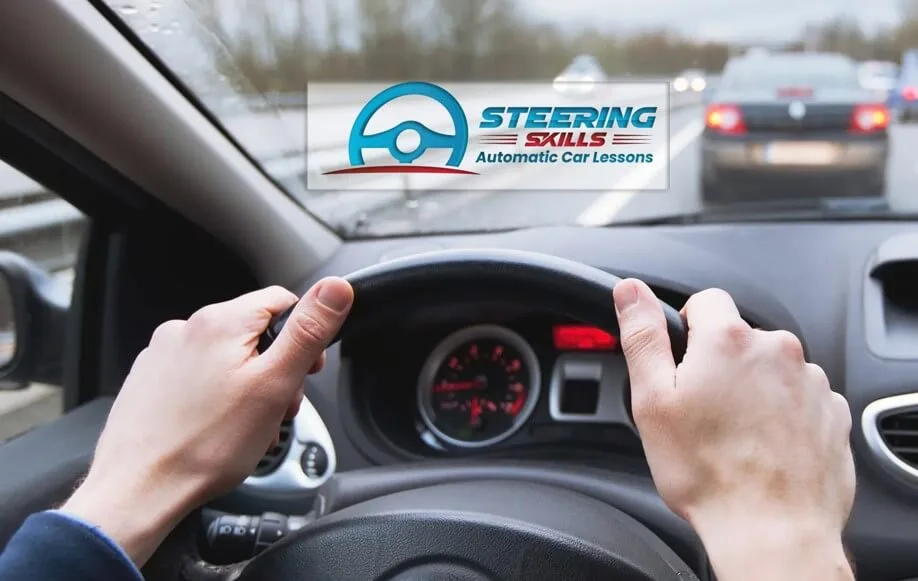
Proper steering control is a fundamental skill that affects every part of driving. Many new drivers struggle with maintaining a steady lane position or controlling the steering on bends and roundabouts. Our instructors focus on correct hand positioning, smooth steering techniques, and maintaining balance at different speeds.
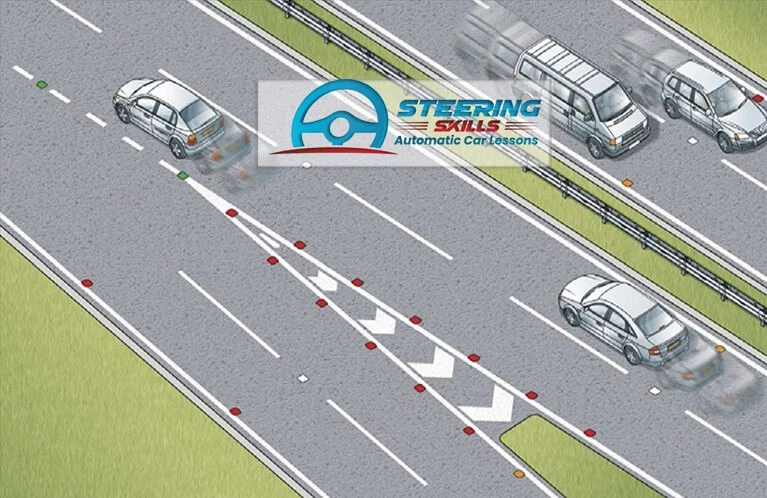
Good road positioning is vital on narrow residential streets, busy urban roads, and multi-lane carriageways. At SteeringSkills UK, we train learners to position the car accurately and confidently without hesitation, helping them stay safe and predictable for other road users.
Observation Skills and Hazard Awareness
From our professional perspective, strong observation skills are the foundation of safe driving. New drivers must learn to constantly scan the road ahead, check mirrors regularly, and assess potential hazards early. This includes identifying pedestrians, cyclists, changing traffic signals, and unpredictable drivers.
Hazard awareness is a key part of the DVSA driving test and everyday driving. We teach learners to anticipate risks and respond smoothly rather than reacting suddenly, which reduces stress and improves safety.
Mirror Use and Blind Spot Checks
At SteeringSkills UK, we emphasise correct mirror use from the very first lesson. Learners are taught when and how to check mirrors, especially before signalling, changing lanes, slowing down, or moving off.
Blind spot checks are equally important, particularly when dealing with cyclists, motorbikes, and pedestrians. Developing the habit of combining mirrors with shoulder checks helps new drivers avoid common accidents and test faults.
Safe Speed Control and Distance Management
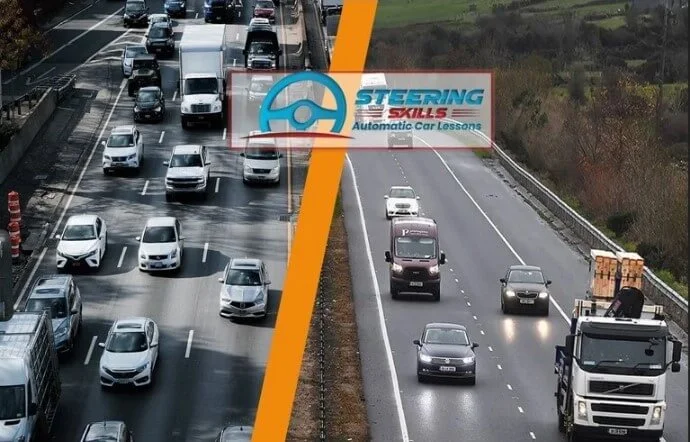
Managing speed correctly is one of the most important skills every new driver must master. Driving too fast or too slowly can be equally dangerous. At SteeringSkills UK, we teach learners how to adjust their speed based on road conditions, traffic flow, weather, and visibility.
Maintaining a safe following distance allows drivers enough time to react to sudden changes. Understanding stopping distances and braking control helps learners drive smoothly and confidently in both city and suburban environments.
Junctions, Roundabouts, and Road Priority
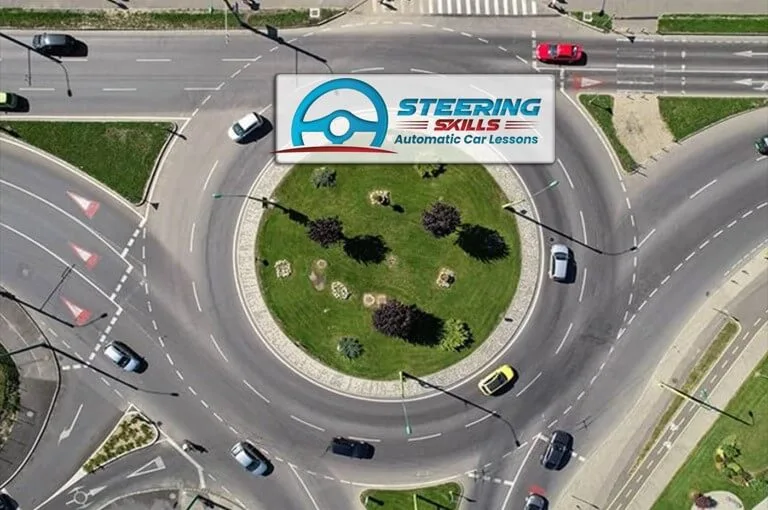
Junctions and roundabouts are often the most challenging areas for new drivers. Learners must understand road markings, signs, priorities, and safe gap selection. At SteeringSkills UK, we provide structured training on approaching, observing, and emerging safely at all types of junctions.
Roundabouts require strong observation, timing, and lane discipline. With regular practice and clear instruction, learners gain the confidence to handle complex junctions without panic.
Defensive Driving Techniques
Defensive driving is a key skill we focus on at SteeringSkills UK. New drivers must learn to expect the unexpected and stay alert to the actions of other road users. Defensive driving involves planning ahead, keeping safe distances, and avoiding unnecessary risks.
By developing a defensive mindset, learners become calmer drivers who can handle busy traffic, aggressive drivers, and unexpected situations with confidence.
Confidence, Calmness, and Decision-Making
Driving confidence comes with practice, but calm decision-making is a skill that must be taught. Nervous drivers often hesitate or rush decisions, leading to mistakes. Our instructors help learners build confidence through structured lessons, clear feedback, and positive reinforcement.
At SteeringSkills UK, we focus on helping learners trust their judgment while remaining cautious and aware, which is essential for both test success and independent driving.
Test Readiness and Real-World Driving
Passing the driving test is an important milestone, but real-world driving requires ongoing awareness and responsibility. We prepare learners with mock tests, local route practice, and realistic driving scenarios so they feel fully prepared for test day and beyond.
Our goal is not just to help learners pass, but to ensure they become safe, skilled, and confident drivers for life.
Final Thoughts from SteeringSkills UK
At SteeringSkills UK, we believe that mastering these essential driving skills creates the foundation for safe and confident driving. With professional instruction, structured lessons, and consistent practice, every new driver can develop the skills needed to succeed on the road. Learning the right way from the start makes driving safer, more enjoyable, and far less stressful—both during the driving test and long after the licence is achieved.