
Defensive Driving Skills in UK in 2026
Driving in the United Kingdom continues to demand more awareness, patience, and adaptability than ever before. In Defensive Driving Skills in UK in 2026, SteeringSkills UK explores the mindset and techniques that help drivers stay safe amid growing traffic density, evolving road systems, and increasing distractions. Defensive driving is no longer simply an advanced concept for professional drivers — it is a fundamental survival skill for everyday motorists.
Unlike basic driving, defensive driving focuses on anticipating risks rather than merely reacting to them. It prioritises hazard perception, situational awareness, and decision-making strategies that reduce the likelihood of collisions before danger fully develops.
Why Defensive Driving Skills 2026 Matters on UK Roads
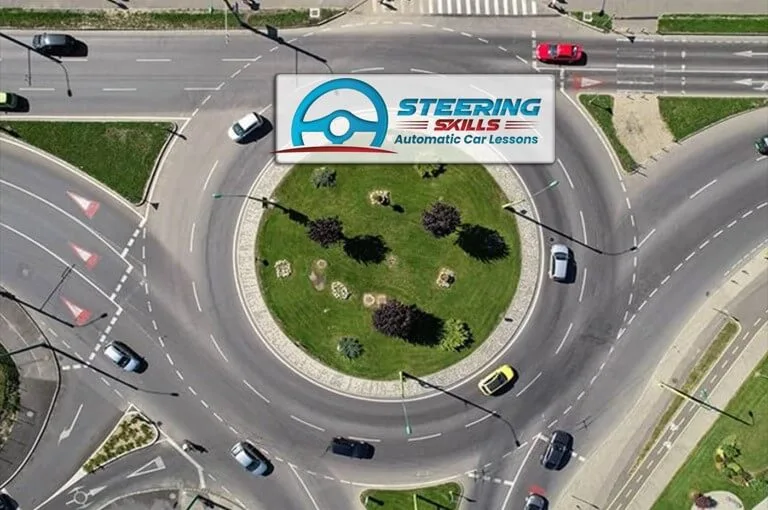
The UK road environment presents unique challenges, including compact urban streets, busy roundabouts, complex junction layouts, and variable weather conditions. Defensive Driving Skills in UK in 2026 emphasises that drivers must constantly adapt to unpredictable scenarios involving pedestrians, cyclists, buses, and aggressive drivers.
In high-density areas such as London, traffic complexity increases significantly. Congestion, lane changes, and frequent stops create conditions where defensive driving becomes critical. Drivers who anticipate hazards rather than chase gaps tend to experience fewer near misses and less stress.
Understanding the Core Philosophy of Defensive Driving Skills in UK in 2026
At its heart, defensive driving is a mental discipline. SteeringSkills UK teaches that safe drivers do not assume others will behave correctly. Instead, they remain prepared for sudden braking, unexpected turns, and poor judgement from surrounding vehicles.
Key principles include:
- Expecting the unexpected
- Maintaining safe following distances
- Avoiding aggressive reactions
- Preserving escape routes
This proactive approach dramatically reduces accident probability and enhances driving confidence.
Observation and Awareness in Defensive Driving Skills in UK in 2026
Observation is the foundation of defensive behaviour. Defensive Driving Skills in UK in 2026 highlights that effective observation goes beyond looking ahead. Drivers must continuously scan mirrors, monitor peripheral movement, and interpret subtle traffic cues.
Strong observation habits include:
- Frequent mirror checks
- Early detection of hazards
- Awareness of blind spots
- Monitoring pedestrian activity
In cities like London, where visual stimuli are constant, maintaining disciplined scanning routines prevents overload and delayed reactions.
Speed Management and Defensive Driving Skills in UK 2026
Speed plays a central role in defensive safety. Excessive speed reduces reaction time, increases stopping distance, and amplifies the consequences of minor errors. SteeringSkills UK stresses that defensive drivers match speed to conditions, not simply posted limits.
Drivers should consider:
- Traffic flow
- Visibility
- Road layout
- Weather conditions
On crowded London roads, lower speeds often improve safety, comfort, and decision accuracy.
Space Management Strategies in Defensive Driving Skills in UK in 2026
Maintaining space around the vehicle is one of the most powerful defensive tools. Defensive Driving Skills 2026 underscores that safe spacing provides time to react and options to manoeuvre.
Effective space management involves:
- Keeping safe gaps ahead
- Avoiding prolonged blind-spot driving
- Allowing lateral escape space
- Adjusting position for visibility
Crowded environments, including London commuter routes, frequently reward patience over urgency.
Hazard Perception and Defensive Driving Skills 2026
Hazard perception is not limited to spotting visible dangers. Defensive drivers identify potential risks before they become immediate threats. SteeringSkills UK trains learners to interpret behavioural indicators, such as erratic steering, hesitation, or sudden lane drifting.
Common developing hazards include:
- Vehicles edging at junctions
- Pedestrians approaching crossings
- Cyclists adjusting lane position
- Sudden braking chains
Early recognition enables smoother, safer responses.
Emotional Control in Defensive Driving Skills 2026
Driver psychology directly influences safety. Stress, frustration, and impatience often trigger risky decisions. Defensive Driving Skills 2026 encourages drivers to remain calm and detached from aggressive road behaviour.
Defensive drivers avoid:
- Tailgating in congestion
- Competitive driving
- Impulsive lane changes
- Escalating confrontations
Busy cities like London frequently test emotional discipline, making patience a critical safety asset.
Defensive Driving Skills 2026 in Urban Environments
Urban driving requires constant interaction with vulnerable road users. SteeringSkills UK highlights that defensive urban drivers anticipate pedestrian unpredictability, cyclist movements, and frequent stops.
Best practices include:
- Reduced speeds near crossings
- Early braking preparation
- Careful junction scanning
- Respect for lane restrictions
Urban congestion, particularly in London, amplifies the importance of foresight and smooth control.
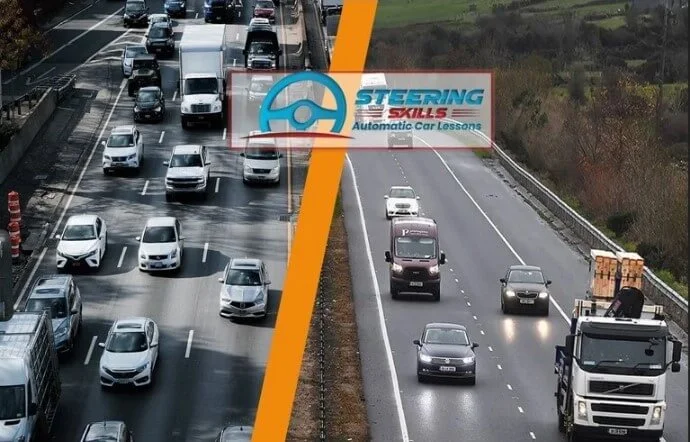
Motorway Safety and Defensive Driving Skills 2026
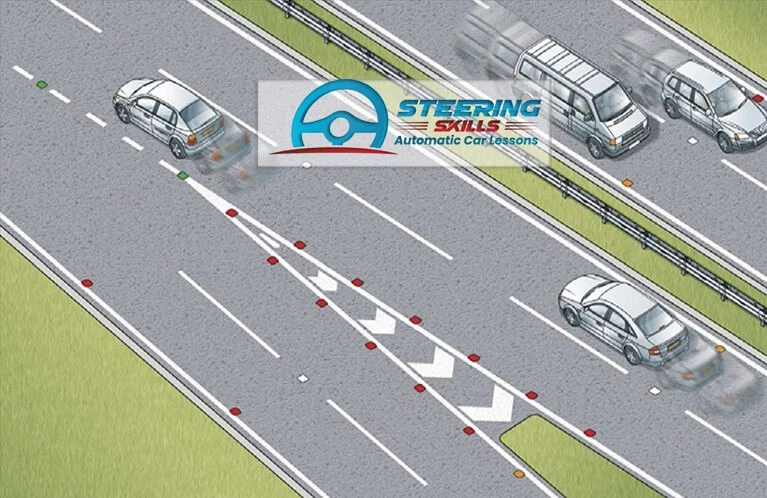
While motorways appear simpler, higher speeds increase risk severity. Defensive Driving Skills 2026 emphasises disciplined lane usage, safe merging, and anticipation of sudden speed variations.
Motorway defensive techniques involve:
- Maintaining safe following distances
- Avoiding unnecessary lane changes
- Monitoring fast-approaching vehicles
- Planning exits early
Consistency and predictability enhance motorway safety.
Technology and Defensive Driving Skills 2026
Modern vehicles offer driver assistance systems such as adaptive cruise control and collision warnings. SteeringSkills UK advises that technology enhances but never replaces defensive awareness.
Drivers must continue:
- Active observation
- Manual judgement
- Situational assessment
- Responsible decision-making
Overreliance on automation may reduce attentiveness, increasing risk.
Building Long-Term Habits Through Defensive Driving Skills 2026
Defensive driving is not a temporary technique but a lifelong habit. SteeringSkills UK encourages consistent practice, reflection on mistakes, and continuous awareness improvement.
Habit-building strategies include:
- Reviewing driving decisions
- Practising smooth control inputs
- Maintaining mirror discipline
- Prioritising safety over speed
These behaviours strengthen judgement and reduce anxiety.
Final Thoughts on Defensive Driving Skills 2026
Road safety in the United Kingdom depends increasingly on anticipation rather than reaction. Defensive Driving Skills 2026 reinforces that skilled drivers are those who manage risk before danger escalates. Through observation, space management, speed control, and emotional discipline, drivers significantly improve safety outcomes.
At SteeringSkills UK, we believe defensive driving transforms not only how motorists handle hazards but also how they experience the road. Whether navigating motorways or tackling the demanding streets of London, defensive awareness remains the most reliable protection against modern driving risks.
FAQs
Here are 10 FAQs for “Defensive Driving Skills 2026” from a UK driving perspective:
What is defensive driving and why is it important in the UK?
Defensive driving is a proactive approach that focuses on anticipating hazards, maintaining safe positioning, and minimising risks caused by other road users. It is particularly important on UK roads due to high traffic density and complex road layouts.
How does defensive driving reduce accident risks?
Defensive drivers identify potential dangers early, maintain safe distances, and react smoothly rather than abruptly. This reduces the likelihood of collisions caused by sudden braking, poor judgement, or unpredictable behaviour.
What are the core principles of defensive driving?
Key principles include hazard perception, effective observation, space management, speed control, and emotional discipline. Together, these help drivers maintain control and avoid dangerous situations.
Is defensive driving only for new or learner drivers?
No. Defensive driving benefits drivers of all experience levels. Even highly skilled motorists can improve safety by refining anticipation, awareness, and decision-making habits.
How does speed management relate to defensive driving?
Appropriate speed allows more reaction time and shorter stopping distances. Defensive drivers adapt speed to road, traffic, and weather conditions rather than relying solely on speed limits.
Why is observation so critical in defensive driving?
Strong observation helps drivers detect hazards early, understand traffic behaviour, and avoid surprises. Continuous mirror checks and scanning routines are essential components.
What role does space management play in defensive driving?
Maintaining safe space around the vehicle provides time to respond and room to manoeuvre. Proper spacing reduces pressure and prevents many common collisions.
Can modern vehicle safety technology replace defensive driving skills?
No. Driver assistance systems support safety but cannot replace human judgement, anticipation, and awareness. Drivers remain fully responsible for safe decision-making.
How can drivers improve their defensive driving skills?
Practising hazard awareness, improving mirror routines, controlling speed, and remaining calm under pressure help develop stronger defensive habits over time.
Does defensive driving help with the UK practical driving test?
Yes. Examiners evaluate anticipation, observation, positioning, and risk management — all of which are core defensive driving behaviours that improve test performance.
Read more blogs:
What’s the Difference between Intensive vs Regular Driving Course? | Lane Discipline Essentials 2026 | Junctions, Roundabouts and Crossing 2026 | Learner Drivers First
Defensive Driving Skills in UK in 2026